To the untrained eye, football may appear like a bunch of players running after the ball. In actual fact, each of the eleven players on either side has their own unique set of duties and responsibilities in the game. Every side that you come across will have a goalkeeper, defenders, a midfield and some strikers up top, and what they do over the course of the game differs quite a bit. Understanding the various positions in a football match and the respective roles they require players to adopt will not only add to your viewing experience but also make you more tactically aware if you take the field yourself.
| Position | Shirt Number | Area of the Pitch | Key Job | Useful Traits |
|---|---|---|---|---|
| Goalkeeper | 1 | In and around their own goal | Stop shots claim crosses and organise the defence | Quick reactions composure communication and positioning |
| Centre-back | 4 or 5 | Centre of the defensive line | Mark strikers intercept passes and block shots | Strength aerial ability anticipation and tackling |
| Right-back | 2 | Right side of the defence | Defend against left-sided attackers and support attacks down the right flank | Pace stamina tackling and crossing |
| Left-back | 3 | Left side of the defence | Defend against right-sided attackers and support attacks down the left flank | Pace stamina tackling and positional awareness |
| Wing-back | 2 or 3 | Wide areas usually in a formation with three centre-backs | Provide attacking width and recover defensively | Stamina speed crossing and tactical awareness |
| Defensive midfielder | 6 | In front of the centre-backs | Break up opposition attacks and protect the defence | Positioning anticipation tackling and passing |
| Central midfielder | 8 | Central areas between defence and attack | Link play retain possession and contribute at both ends | Stamina passing vision and decision-making |
| Attacking midfielder | 10 | Between the opposition's midfield and defence | Create chances play through-balls and support the striker | Creativity close control vision and composure |
| Wide midfielder | 7 or 11 | Left or right side of the midfield | Provide width deliver crosses and support the defence | Stamina crossing teamwork and positional awareness |
| Centre-forward/striker | 9 | Central attacking areas near the opposition's goal | Score goals hold up the ball and lead the attack | Finishing movement strength and composure |
| Winger | 7 or 11 | Wide attacking areas near the touchlines | Beat defenders create chances and deliver crosses | Pace dribbling acceleration and crossing |
| Inverted winger | 7 or 11 | Wide attacking areas cutting towards the centre | Move inside to shoot create chances and combine with teammates | Close control agility shooting and creativity |
| False nine | Usually 9 | Central attacking areas frequently dropping into midfield | Create space by drawing defenders out of position and linking play | Vision technical ability intelligent movement and awareness |


How a Football Team Is Made Up
When you throw a match up on the television, before kick-off, you’ll notice how they display the line-up for each side. This actually describes the duty of each role on the team for the duration of the game.
Eleven a Side: One Goalkeeper, Ten Outfield Players
In most cases, the line-up that’s displayed or called out on the intercom will have eleven players. This is because that’s the size of a standard football game at the professional level. You may expect a side to have fewer players if it’s a younger age group or if it’s a five-a-side, seven-a-side or nine-a-side tournament being played. It’s the duty of the goalkeeper to keep out any threats from making their way into the goal. They are also the only players permitted to handle the ball within their own penalty area. The other players have to be a little more resourceful, only being allowed to use their feet, heads and bodies to control, pass and strike the ball.
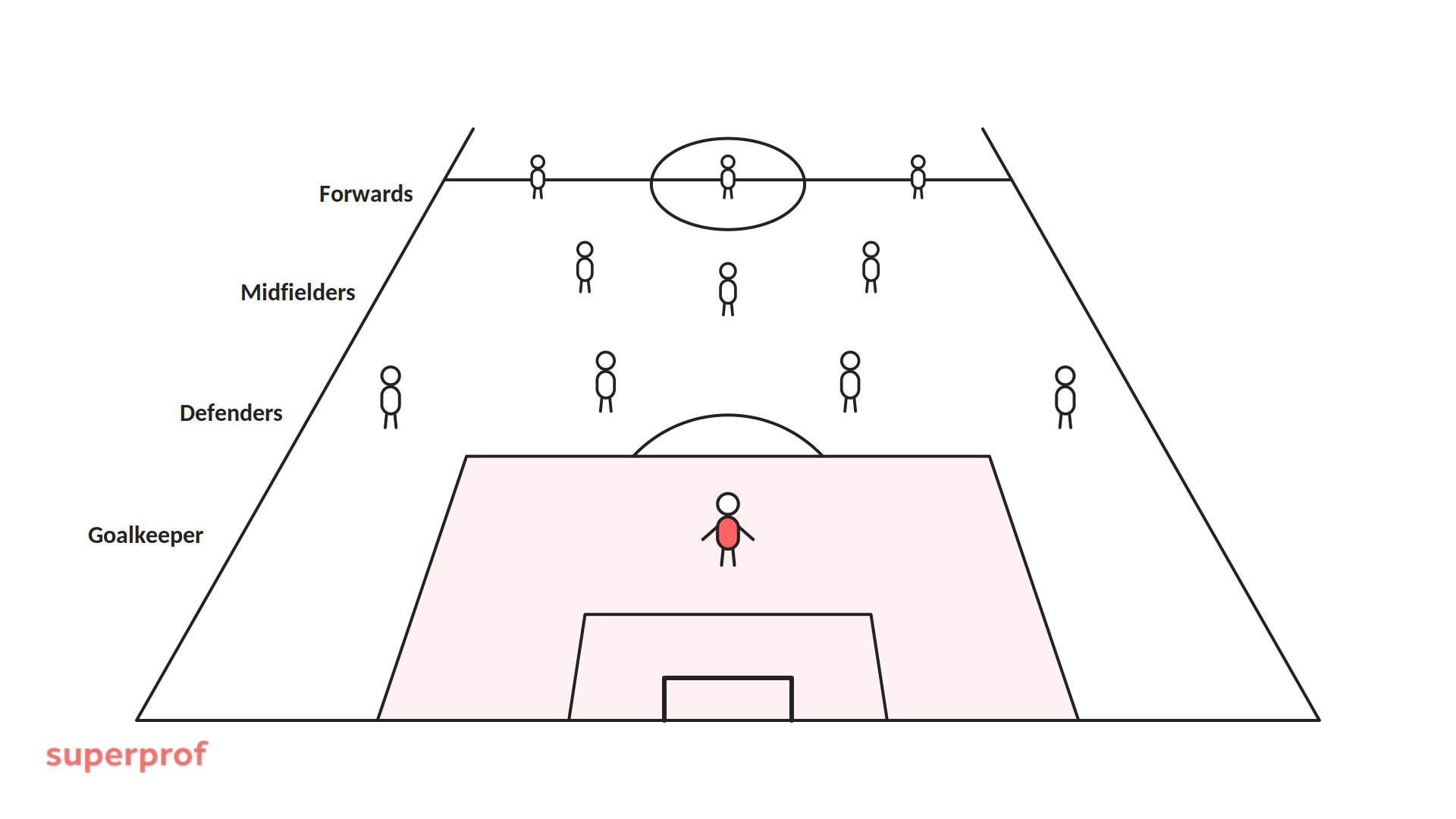
Among these remaining ten players, instead of hunting down the ball as a herd, they have their own roles and areas that they occupy on the pitch. Each side will have their remaining players split up into defenders, midfielders and forwards. As the names might suggest, it’s the role of the defenders to protect the goal, midfielders are positioned in the centre of the pitch and link defence and attack, and forwards focus on creating and converting scoring opportunities.
Team Sizes, Substitutions and the Seven-Player Minimum
For the standard-sized game with 11 players on each side, teams need to field a minimum of seven players in order for the game to continue. However, when you tune in to watch a game at the professional level, you'll always see a full squad take the field.

So, if a team were to have multiple players sent off for committing fouls, then the side would automatically forfeit the game if seven players didn’t remain eligible to play.
Of these players, there also needs to be one goalkeeper at all times.
Over the course of a game, a team is generally allowed to make three substitutions.
Understanding different football formations can help you see how managers arrange players across the pitch and assign responsibilities to each position.
This gives teams an opportunity to bring on fresh legs throughout the game and make tactical changes based on the players that are fielded throughout the game. Bringing on new players with fresh objectives can make a real impact on the game!
Small-Sided Formats at Youth Level
We touched on some of the smaller-sized games earlier. These games field fewer players and take place on smaller pitches, and they actually come with their own unique set of strategies, as they tend to facilitate different styles of play from those that might take place on a full-sized pitch. Five-a-side, seven-a-side and nine-a-side football game formats can also be used to help younger players develop their technical skills and understanding of positioning.
The Goalkeeper
This is arguably one of the most substantial roles on the pitch. The goalkeeper is the player responsible for keeping the ball out of the net. They are usually either the hero or the villain of the game, depending on whether the team wins or loses. Can you imagine playing with that kind of pressure on your back?
The Role In and Out of Possession
No matter the game, the goalkeeper is always going to be the last line of defence, responsible for preventing the opposition from scoring. So, they’re going to have their managers, teammates, as well as all of the fans in the stadium, looking at them for some crucial saves, claiming crosses, intercepting dangerous passes and organising defenders during set-pieces. These players really need quick reactions and good communication skills so that they can organise the players around them to keep their eyes on the ball at all times.
Traditional shirt numbers often indicate a player’s position, with number 9 commonly associated with strikers and number 10 with creative attacking midfielders. However, modern footballers can wear almost any available squad number, so a player’s number does not necessarily reveal their role.
The Defenders
If a team wants any real chance of a clean sheet or simply limiting the number of opportunities that come their way from the opposition’s attack, they’re going to need some solid players at the back. These are the players standing in front of the goalkeeper, acting as a wall and interrupting any possession that might result in shots at the goal.
Centre-Backs
Even among this back line, there are specific roles that you’ll want to familiarise yourself with. Anchoring the football defensive positions right in the middle, you’ve got the centre-backs. These guys are responsible for marking strikers, blocking any shots they might get off or preventing them from happening in the first place.
Full-Backs
Then, on either side of these players, you’ve got the full-backs, a position that demands an entirely different strategy and playing style from players. If you’re ever tasked with playing full-back for a team, then you’d better have your running boots on, as you’re going to be required to chase down the opposing team’s midfielders as well as bring the ball up to your own players in the centre of the field.
Wing-Backs
If a side decides to opt for five at the back, then the widest defenders are known as wing-backs. They tend to have a looser positional role than full-backs, often drifting up and back along the wings at a moment’s notice to follow the game as it unfolds. It’s one of the more stamina-demanding roles a player can take on, constantly requiring them to make runs up and down the pitch.
The Midfielders
Midfielders are at the heart of the action, right up there in the centre of the pitch. They are the ones who bring the ball from the back line up towards the strikers. Their role is more mixed, since players in this area of the field need to be able to win possession with their defensive abilities while also being able to advance the ball and be clinical with their passing.
Defensive or Holding Midfielder
Within the midfield, we’ve again got some more defined roles for players who occupy this space. A defensive midfielder is one of those clutch players who acts as a sweeper, preventing possession from reaching the back line. Their defensive positioning also comes in handy when the team is looking for an additional passing option when bringing the ball up the field.
Central Midfielder
A more mixed role is that of a central midfielder. These players really can’t afford to have any holes in their game at all, seeing as they’ve got a bunch of offensive and defensive responsibilities from the moment the starting whistle sounds.
This is often thought to be one of the more challenging roles on the team, as it asks players to be all-rounders.
The team will look to these players to control the pace of the game and ensure that the side keeps possession of the football.
Whether it's making important tackles to win back possession, playing the ball up the pitch towards the strikers, or having a long-range shot on goal, these players can really have a profound impact on the game.
Familiarising yourself with football pitch dimensions helps explain why players occupy different areas of the pitch and how much space they have to cover.

If a team has confident central midfielders, the ball should move seamlessly around the pitch. It makes life a whole lot easier for the entire team when players can receive the ball in positions that they are strong in, thanks to some strong central midfielders.
Attacking Midfielder
Then we’ve got the big guns: attacking midfielders. If a team’s formation allows for any midfielders to take this role, then they can expect to get more shots off or make it easier for their dedicated strikers to get the ball. These extra numbers up the top end of the pitch really make an impact on the pressure a team can put on opposing defenders.
Wide Midfielders
For teams whose formations include wide midfielders, their strategy will likely involve a lot of crosses into the box. This is because these wing players are often tasked with making relentless attacks down the sides of the pitch, delivering the ball to any striker who finds space. On the flip side, they need to be able to get back and pick up their defensive duties just as quickly, as they’ll need to stop the opposition from doing the same on the other side.
The Forwards
If you’ve ever had a game of football at school, then you’ll remember all of the arguments between students wanting to play up top as a forward. This is because these players tend to get a taste of the glory, putting the ball into the back of the net.
A utility player is someone capable of performing effectively in several positions. This versatility gives managers more options when selecting a team, responding to injuries or making tactical changes. Utility players are particularly valuable when a squad has limited depth in certain areas.
Centre-Forward or Striker
Whether you call it a centre-forward or striker, the role remains the same: put the ball in the back of the net. These players need to be able to create their own shots or find the other end of any crosses that come their way over the course of the game. It’s their job to ensure they convert the possession that their teammates have worked so hard for into goals.
Wingers and Inverted Wingers
If a team fields three players up top, then they will have wingers who play on either side of the striker. These players tend to occupy the same side as their stronger foot, making it easier to beat a defender and deliver a cross. Players in these positions also need to be well capable of shooting, as scoring opportunities will often present themselves over the course of a 90-minute game.
The False Nine
Another role that forwards might take on in a team is that of the false nine. This is a player who plays up top but closer to the midfield, often dropping back as the game requires them to fulfil more defensive duties until the next attack calls their number. They are also needed when it comes to bagging some goals, but their role extends to orchestrating possession in the football midfield positions too.
A Short Word on Formations
↔️ Covering Space
When one player moves out of position to challenge an opponent, a teammate may need to cover the space left behind.
This helps prevent gaps from opening up and gives the team a better chance of stopping attacks.
⚽️ Creating Passing Options
Players can help teammates keep possession by moving into open spaces and offering different passing angles.
Spreading out creates more options on the ball, while supporting runs provide alternatives when forward passes are unavailable.
🗣️ Communicating Clearly
Short, clear instructions help teammates respond to changing situations.
Calling for the ball, warning a teammate about an approaching opponent and communicating during set-pieces can improve coordination and reduce avoidable mistakes.
You might have noticed that when we’ve been discussing various roles on the pitch, we’ve referred to the formation quite a bit. Well, this is because not all games will have these defined roles for players to play. A formation essentially describes the positioning of players on the field and the roles that they will have as a game unfolds. Common examples include 4-4-2, 4-3-3 and 3-5-2, with the numbers representing defenders, midfielders and forwards, excluding the goalkeeper. So, in order for there to be wingers or wing-backs in a game, a team must field a formation that allows for these positions.
Which Position Might Suit You?
How many positions are there in football? There are 11 football positions in professional matches. So, how do you know which is for you? Well, in order to arrive at a position that might suit you, you’ll need to assess where your strengths lie. Let’s take a look at some of the things that will help you determine where you might be most useful on the pitch.
Matching Pace, Height, Stamina, Temperament and Game Reading
As we’ve seen, there are plenty of different positions on the pitch and even more defined roles within these positions. The thing is that each role rewards different attributes, although no single body type or personality determines where someone should play. If you’ve got a strong cardiovascular engine, then you might suit a position along the wing, as your running will be leveraged to outpace the opposition.

If you’re on the taller side, then centre-back or centre-forward are roles that will be calling out for you. You’ll have an easier time making clearances or creating chances from crosses at either end. If you fancy your reaction times and feel like you perform under pressure, then you might be better suited to the position of goalkeeper than to others.
Why Most Young Players Try Several Positions First
When you’re playing the game as a younger player, time is on your side. As you develop your abilities on the pitch, it’s equally important to try your hand at a number of roles. While physical attributes can make a player more suited to a role, their enjoyment and attitude towards a position are ultimately going to serve as the biggest determinants of their success. Knowing the offside rule helps you understand how attackers time their runs and how defenders work together to maintain their defensive line.
Where Coaching Helps With a Positional Switch
Having a strategy in place is one thing, but games rarely pan out exactly as we’d hope. That’s why the manager’s role is incredibly important. The manager needs to be able to adapt the game plan in response to how the game is unfolding. Often, this requires making positional switches during the game. This involves moves like having a midfielder shift back to centre-back or having a player push forward in search of a goal. Now that you’ve got an in-depth understanding of the positions on the football pitch and the various roles that they demand of players in a squad, you can find the best football positions for you on any team you join!
Summarise with AI:
Did you like this article? Leave a rating!

 Loading...